Wednesday, November 5, 2008

Garnier Hair Singapore

Compsognathus (Jaw elegant) Soft Tissue Discovered


First discovered in Germany in the 1850's, the Compsognathus is one of the smallest dinosaurs known. From head to tail measured less than 1 m, and their bones were small and fragile. Fortunately for scientists, Compsognathus lived near the shore of a tranquil lake. After his death, some of these animals sank to the bottom of the lake and the still waters said they would not break the bones before they began the process of fossilization.

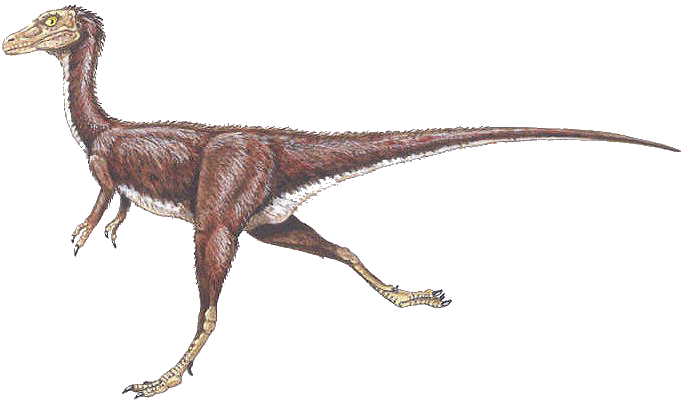
The Compsognathus was a bipedal animal. His long, thin hind legs showed that it was adapted for the race. His body was shaped like a barrel and abdominal ribs had put up with the intestine and other organs. The front legs were also long and thin and hand consisted of two long fingers and a third reduced to just a lump. The Compsognathus could have used his hands as hooks or fastening tools for capturing prey.

Small dams
his skull features give us the keys to Compsognathus diet. The teeth are sharp and pointed, but the lower jaw and skull are quite elongated and not particularly strong. His favorite food could be small vertebrates such as lizards and mammals and insects. In a German specimen of Compsognathus is preserved skeleton of a small lizard in the body cavity. Their presence suggests that the Compsognathus was a predator movements agile and quick, able to identify and hunt even small and elusive prey such as lizards.

The exception to the rule
The popular belief is that large dinosaurs were reptiles that lived in prehistoric times surrounded by high vegetation, but with this kind of dinosaur can be seen that they were not all enormous, but some like Compsognathus were smaller than a dog today.

The Compsognathus was the hollow leg bones, skull and a long tail light and thin that extended straight back.

SHEET
Gender: Compsognathus
Rating: Theropoda; Coelurosauria; Compsognathidae
Length: 60-100 cm
Height: 60 cm
Weight: 2.5 Kg
Period: Jurásicop late, about 156-150 million years s
Found: Bavaria (Germany) and southern France.


Source: Larousse of the dinosaurs.

Thursday, October 30, 2008

Calgary Police Car Accident Report

T-Rex. Is it possible to clone dinosaurs?

Looking for information about the possible cloning of dinosaurs discovered this amazing story reporting the discovery of soft tissue inside a T. Rex femur. This is what you put in this news :

"Three years ago, paleontologists working in the field of Hell Creek, Montana (USA) found several bones of a Tyrannosaurus Rex 'submerged' in thousand cubic meters of rock extremely hard. During the difficult process of recovery of the skeleton, dinosaur femur measuring 1'07 meters broke the stunned scientists unveil one of the biggest upsets of recent times. Inside the bone had, in almost perfect condition, soft-tissue cells and blood vessels from 70 million years old. (...)

The parties' hard 'of animals, especially bones, are preserved as fossils, and sometimes found fossilized other tissues, but is difficult to see in its' normal 'when have more than one million years old. These findings prove that the tissue can be preserved much longer ... up to 70 million years. (...)


A sample of soft tissue
found in Tyranosaurus

is the first time that soft tissue is in good condition for study in a as old dinosaur. "We have found samples of insects that have survived in amber, but never so old," said Dr. .(...)

The news is crucial because if it were possible to isolate the protein cells tissue could be achieved will learn much about these extinct creatures, dinosaurs, the study could definitively reveal whether they were warm or cold blood, on the life and habits. But the most impressive discovery is that these samples to extract the DNA ADN.Con the vision of Michael Crichton in his book "Jurassic Park" would look like a work of science fiction ever come close but the utopian aspirations of man coexist with the dinosaurs. Who knows with this discovery maybe in a few years as possible to visit a terrible tyrannosaurus cloned in any zoo ... "

As you see, is a very important finding. With this finding and that of my previous article opens the door to think that, in future, be possible to clone dinosaurs by man. Hence moral doubts now arising about whether to do or not, would be a Nobel Prize in science insurance, and he would recover a way of life extinct, but extinction of these animals was the work of nature, not man, So many people think it should be left where they are and dedicated to saving animals like the Iberian lynx or the donkey.

I leave the moral issue in your hands, to think a bit about what would be better because I have I still not clear and I find myself unable to give a clear opinion.